SeaKITShub
enterprise ecology
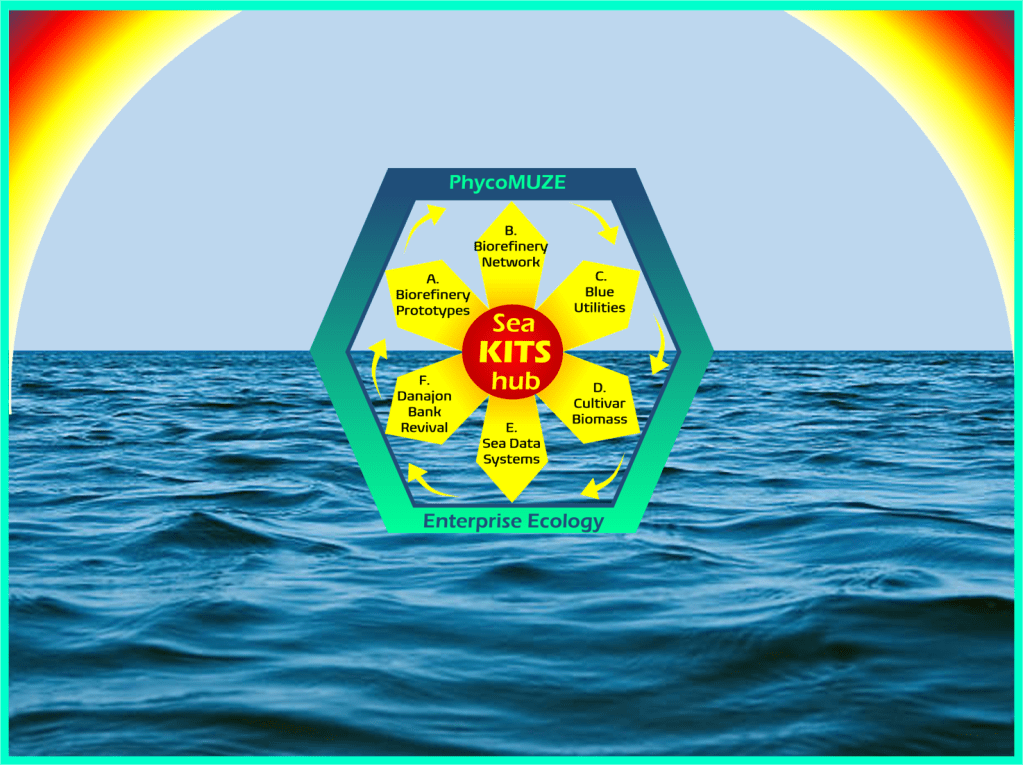
Six SeaKITShub Blue Ocean Opportunities
SeaKITS knowledge, information, tools and solutions for enterprise ecology

Blue Ocean Enterprise Ecology
Profitable micro, small & medium enterprises (MSME), mostly family owned and operated, must be the foundation for enterprise ecology.
- KITS internalized in MSME enable them to manage, control and influence ecosystem services through enterprise ecology.
- Community MSME are embedded in socio-ecological production ecoscapes (SEPE).
- KITS comprise the core art, science and technology that enable successful enterprise ecology.
- Enterprise ecology harmonizes and valorizes diverse ecosystem services to balance sustainability with profitability.
- Enterprise ecology is based on Blue Ocean ecoeconomic principles.
Multi-stream, zero effluent processing
- Single stream technologies waste half the value of seaweed biomass as they extract hydrocolloids, while destroying and/or discarding other biomass components.
- Multi-stream, zero effluent (MUZE) processing develops diverse markets; applies innovative technologies; produces a broad product range; yields minimal biomass value waste; and adds value near farm areas.
Affordable data for managing marine environments
Open-source solutions as a gateway:
Open-source technologies such as Arduino and many others can be a gateway into production of affordable marine data hardware systems. This approach can be very effectively applied by the sorts of technical talent that is abundant in the Philippines.
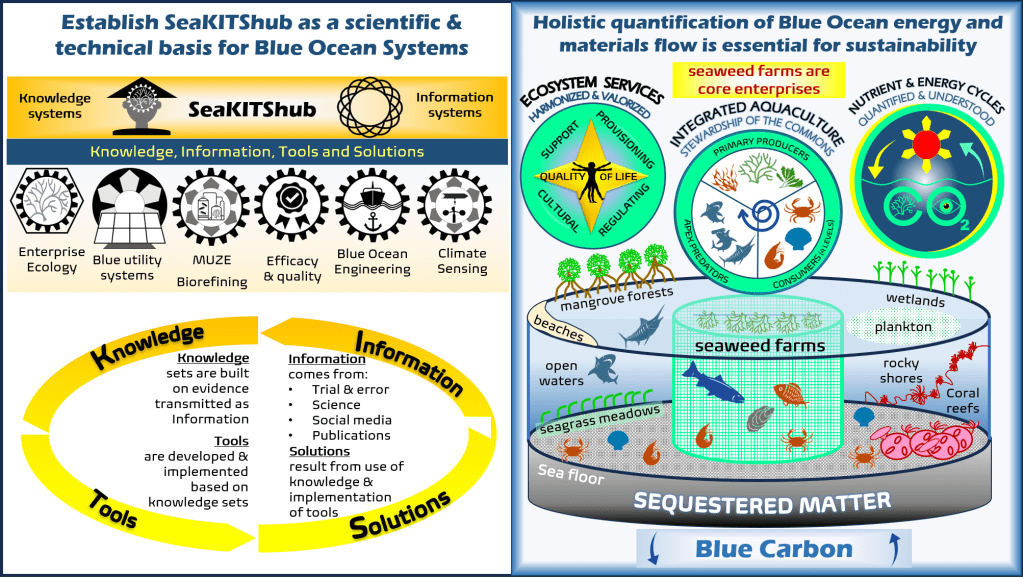
Enterprise actions are key drivers of global environment solutions, yet thousands of seaweed, aquaculture and fisheries enterprises have been devastated by circumstances beyond their control. Many have no path to sustainable recovery. SeaKITShub can connect paths to solutions.
Cost-effective, safe systems on the sea
Plastics and other materials issues: Seaweed farms use a great deal of plastic as ropes and floats. Little or none of that is recycled. There is an opportunity to recycle plastic from seaweed farms not only for seaweed farm systems but also for construction and other uses. Meanwhile the efficacy of seaweed-based plastics can be developed to the point where they are cost-effective as farm materials.
Mechanization and other gear innovations: Mechanization, tube nets and a variety of other farm system innovations will impact production economics in the future. We should be in the forefront of such developments.
Adaptation cycles: As Blue Ocean innovations are tested results should be made available as knowledge products with open accessibility.

Providing customers with the quality they want
Among established value chain players, inability to consistently meet quality and efficacy standards is seen as a highly significant barrier to new entrants in seaweed-based value chains. Scrupulously managed, open-source protocols and affordable test facilities would eliminate this barrier.
Good QA, QC and efficacy assurance are essential: Standardized protocols applied by linked facilities who do cost-effective testing and are integrated to the level of cluster hubs.
Access to in-house and contract facilities: Standardized protocols applied by linked facilities who do cost-effective testing and are integrated to the level of cluster hubs.
Affordable energy, water and other essentials
Urgently needed by seaweed enterprise clusters: Coastal communities along tropical seashores are famously mired in poverty, yet forced to pay high prices for necessities such as fuel, electricity and water. Packaged blue utility systems can ease such burdens not only for seaweed enterprises but also for communities at large.
Impact on farming costs: Vessel operations can me a major contributor to farm operating costs and petroleum-based fuels are notoriously expensive and sparsely available in coastal farm areas. Blue utility systems can reduce costs and enhance availability.
Closely linked to seaweed value addition: Biorefinery systems require utility systems and wastes such as condensed water vapor can be cycled back to communities as fresh water.
 SeaKITShub